

Medically reviewed by Dr.EMİN TEKİNAY, DDS, PhD in Prosthodontics with 20+ years of experience in advanced restorative dentistry.
Are you experiencing visible gum tissue in your dental implant? Is your smile no longer pleasant? Some may also experience i can feel my dental implant through my gum?These are certainly worrying signs.
Patients often opt for dental implants to alleviate feelings of insecurity. However, when gum recession occurs and the implant becomes exposed, patients naturally worry about implant failure. Therefore, immediate intervention by a dentist is crucial.
In this guide, we’ll explore the issue of feel implant under gum normal, whether it’s a normal symptom or a cause for concern, and when a patient should contact their dentist.
Is Feeling Your Implant Through the Gum Normal?
No, it’s normal for a patient not to feel a dental implant or the solid object placed in the gum. Therefore, this requires a visit to the dentist in charge of the case, especially if this sensation is accompanied by strong throbbing pain or swelling of the gums. These signs indicate inflammation of the gum tissue and require dental intervention.
Why You Might Feel the Implant: 5 Possible Reasons
After dental implant surgery, some patients report i can feel my dental implant through my gum. Here are the most prominent reasons that lead to dental implant gum problems:
1.Gum Recession Around the Implant (Most Common)
Gum recession around dental implant is one of the most common reasons for implant abutment showing through gum. This is due to poor oral hygiene, resulting in the patient feeling the implant, especially when chewing.
2.The Abutment Becoming Exposed
The abutment is the part responsible for connecting the dental implant to the crown. In some cases, thinning or recession of the gum occurs, causing the implant abutment showing through gum.
3.Peri-Implantitis Causing Bone Loss
Inflammation of the tissues surrounding the implant is one of the most prominent causes of dental implant erosion. Over time, the implant weakens, causing a portion of it to become visible. In such cases, urgent dental intervention is necessary to treat the inflammation before it worsens.
4.Implant Not Fully Osseointegrated
Dental implants need sufficient time to integrate with the jawbone. If this integration does not occur properly, the patient may experience discomfort or a hard lump in the gums, requiring immediate dental intervention.
5.Normal Healing — Implant Cap Slightly Visible
During the recovery phase after dental implant surgery, the implant cap may protrude or be felt with the tongue. This is considered normal, especially if it is not accompanied by pain.
Normal vs. Concerning: How to Tell the Difference
After dental implant surgery, patients may experience i can feel my dental implant through my gum.In some cases, the implant may become visible or palpable. But when is this normal, and when does it require dental intervention?
✅ Normal Situations (Don’t Panic)
During the recovery period from dental implant surgery, patients may experience some symptoms that gradually subside and lessen over time. These symptoms include:
- Feeling the implant under the gums and experiencing discomfort.
- Mild gum pain accompanied by swelling that gradually decreases day by day.
- Mild gum sensitivity, especially when chewing.
- Feeling the gum tissue, especially when chewing.
⚠️ Signs That Need Dental Attention Soon
Experiencing pain after dental implant surgery is normal. However, if the pain intensifies, it may indicate a problem. Here are the most prominent symptoms that indicate the need to see a dentist immediately:
- Pain that persists for several days.
- Swelling and redness, especially at the implant site.
- Frequent bleeding from the gums.
- Gum recession and exposure of part of the dental implant or crown.
- Pain when chewing and discomfort when closing the mouth.
- Bad breath.
Emergency Signs — Act Immediately
Dental implant failure is quite possible, but any symptoms or signs indicating implant failure require immediate attention. The most prominent of these symptoms include:
- A feeling that the dental implant is loose and moving.
- Severe pain at the implant site that doesn’t subside even with painkillers.
- Significant swelling of the gums and jaw accompanied by bleeding and pus discharge.
- Fever.
- Difficulty opening the mouth.
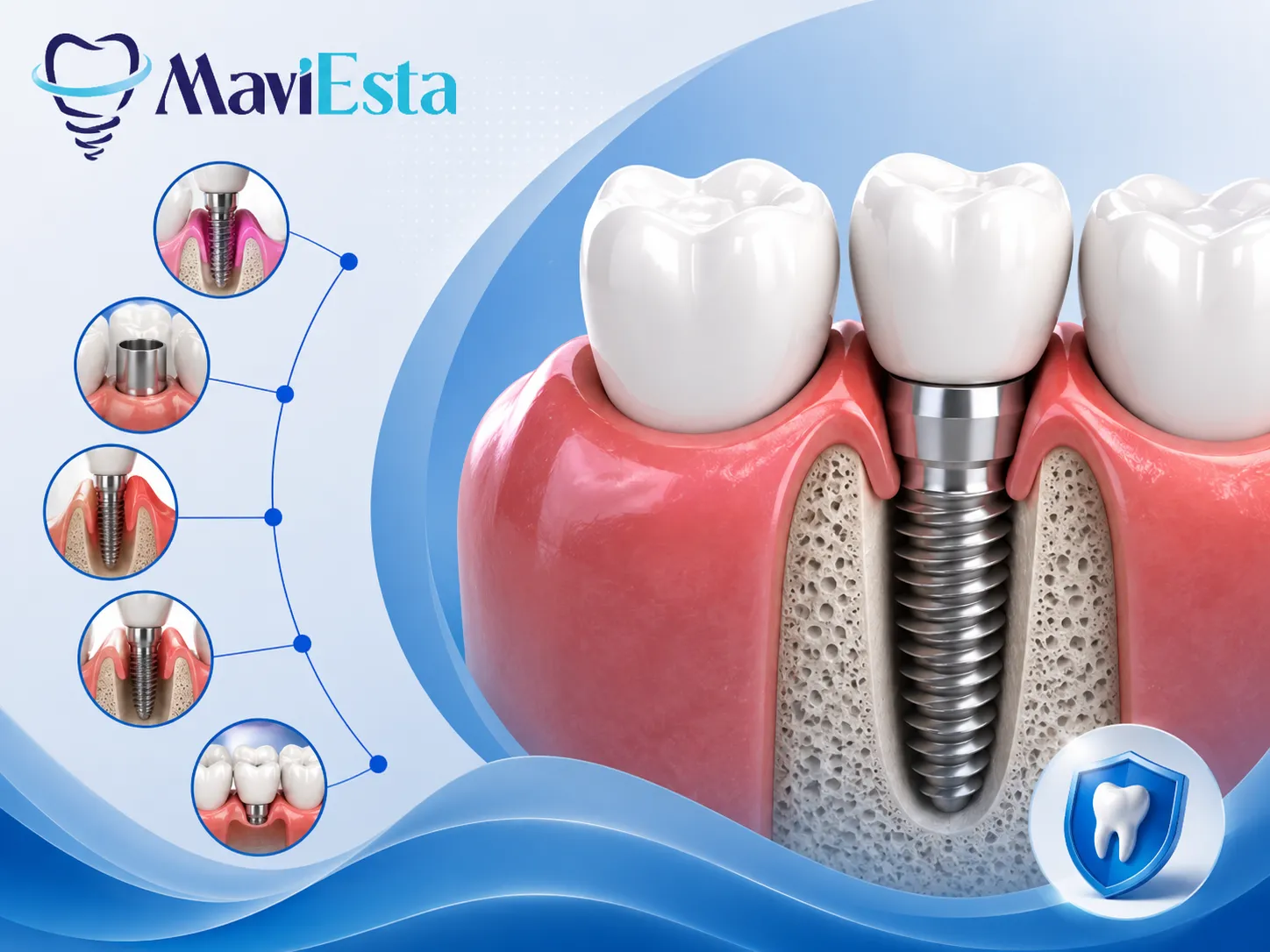
Gum Recession Around Implants: Causes & Treatment Options
Gum recession around dental implant is a problem that patients may notice after dental implant surgery, but it develops over time. The patient’s gums begin to recede, exposing the metal part of the dental implant, which can affect the patient’s smile, especially if the implants are front teeth. Here are the main reasons for gum recession around dental implants:
Gum Recession:
Inflammation of the tissues surrounding the gums is one of the most common causes of gum recession. This occurs due to poor oral hygiene, leading to tartar and plaque buildup on the teeth, which in turn causes the problem.
Bone Recession:
Weakening or erosion of the bone surrounding the dental implant is another cause of gum recession. The teeth lose their natural support, causing part of the implant to become visible.
What Happens If You Ignore It?
Understanding the causes of gum recession helps patients receive appropriate treatment. Ignoring this problem can lead to other complications, including:
- Severe pain when chewing food or consuming hot or cold drinks due to weakened gums.
- Exposure of the dental implant or crown due to gum recession.
- Inflammation around the dental implant caused by plaque buildup in the gaps created by gum recession.
- Failure of the dental implant due to weakening and erosion of the bone surrounding the implant, resulting in the tooth losing its supporting structure.
Always remember that early intervention by your dentist helps minimize the problem by developing an effective treatment plan. Conversely, neglecting the problem can lead to implant failure in later stages.
Had Your Implant Placed Abroad? Get a Free Remote Assessment
If any problem arises, even a minor one, after dental implant surgery at MaviEsta Clinic, we are always ready to discuss every detail and provide the necessary care to ensure a 100% successful implant placement.
Discover the best place to get dental implants in the world with Turkey leading affordable quality treatments saving up to 70% compared to US UK.
MaviEsta WhatsApp Photo Consultation
Distance is no longer an obstacle to receiving the dental care you deserve. If you are experiencing gum recession after dental implant surgery, simply take a photo of your teeth, send it via WhatsApp, and a dentist from MaviEsta Clinic will contact you.
Contact MaviEsta today via WhatsApp
FAQs
Why can I sometimes feel my dental implant in my gums?
If this sensation is not accompanied by any other symptoms such as pain, it is perfectly normal and part of the recovery process from dental implant surgery.
Why is my implant showing through my gums?
There are several reasons why the metal part of a dental implant might be visible, the most common being gum recession.
How long does it take for gums to heal around a dental implant?
On average, it takes 3 to 6 months for complete healing.
Is it normal to feel a dental implant?
This is a normal sensation, especially if it is not accompanied by any other symptoms such as pain or swelling.
Conclusion
I can feel my dental implant through my gum. It’s may be at risk of dental implant failure, especially if the sensation is accompanied by swelling, pus, and bleeding in the gums, or persistent pain that doesn’t lessen even with painkillers. Always remember that early intervention by your dentist is crucial for a better outcome. Therefore, if you notice any uncomfortable symptoms around your dental implant, please contact your dentist immediately to avoid any long-term complications.