

Medically reviewed by Dr.EMİN TEKİNAY, DDS, PhD in Prosthodontics with 20+ years of experience in advanced restorative dentistry.
Dental implant surgery is one of the most common procedures in Turkey. However, after the procedure, patients may experience some symptoms and complications, including throbbing pain after dental Implant crown.The intensity of the pain varies from person to person. It may also be accompanied by discomfort and gum inflammation, ranging from moderate to severe, and in some cases, it can worsen.
In this article, we will discuss whether pain after implant crown normal. We will also cover the most prominent symptoms associated with dental implant surgery during the first 72 hours, how to manage them effectively, and when to consult a dentist.
Is Throbbing Pain After Crown Placement Normal?
Throbbing Pain After Dental Implant Crown is very common. It is often described as a mild tingling sensation. This type of pain is usually triggered by consuming very hot or very cold beverages in the initial period after the crown is placed. In these cases, rinsing with warm salt water may help alleviate the pain, or you can use painkillers prescribed by your dentist to manage gum and tooth pain after dental crown placement.
Normal Pain vs. Warning Signs — Timeline Guide
After dental crown placement, some symptoms may occur. These can be categorized as normal, warning signs, or those requiring immediate dental attention.
✅ Normal: First 48–72 Hours (What to Expect)
During the first 72 hours after dental crown placement, the following symptoms may occur:
- throbbing pain after dental implant crown, which can be managed with painkillers.
- Discomfort when opening and closing the mouth.
- Difficulty swallowing or chewing, which gradually decreases over three days after dental implant placement.
- Mild swelling of the gums and cheeks during the first 72 hours after dental crown placement.
⚠️ Concerning: Pain Beyond 1 Week
If pain persists beyond the first week, it may be a cause for concern and warrants a visit to your dentist. Symptoms that may appear during this period include:
- Gum inflammation accompanied by pain, tingling, redness, and swelling.
- Difficulty chewing or a feeling of excessive pressure on the area when chewing.
- Inadequate healing of the tooth wound within the first week after crown placement.
🚨 Emergency: Seek Help Immediately If
In some cases, immediate dental intervention is required if the patient experiences the following symptoms:
- Severe gum pain that does not subside even with painkillers.
- Severe swelling of the gums or cheek.
- Pus discharge from the mouth or foul odor.
- Fever.
- Difficulty opening the mouth to swallow or drink water.
These signs may be warnings of procedure failure, requiring immediate and urgent intervention from a dentist.
7 Common Causes of Throbbing Pain After Implant Crown
Throbbing Pain After Dental Implant Crown is a common symptom after dental implant crown pain causes, so here are 7 causes of throbbing pain after dental implant crown:
1.Bite Misalignment (Most Common)
Bite misalignment implant crown is a common symptom after dental crown placement. It occurs when the crown is slightly higher than the teeth, resulting in pain and a feeling of increased pressure when chewing.
2.Gum Tissue Irritation
Peri-implantitis symptoms are very common after dental implant surgery, especially if the crown puts extra pressure on the gums while chewing, resulting in throbbing pain.
3.Excess Crown Cement Left Behind
Cleaning the teeth thoroughly after dental crown placement is essential, especially removing any remaining cement. Neglecting proper cleaning can cause throbbing pain after dental implant Crown or a pricking sensation.
4.Tight Interproximal Contacts
When the space between the dental crown and the adjacent teeth is very narrow, friction occurs, causing increased pain, especially when biting and chewing. This results in a slight throbbing pain, also known as a pricking sensation.
5. Peri-Implantitis (Infection Around the Implant)
This is an infection around the implant that can occur after dental crown placement. It’s a bacterial infection affecting the gums and implant bone and requires prompt intervention from a dentist. It’s usually accompanied by gum swelling and bleeding.
6.Bruxism (Teeth Grinding at Night)
Excessive pressure on the teeth, especially during sleep, strains the gums and causes irritation of the gum tissue, resulting in throbbing pain.
7.Implant Failure
In some cases, dental implants fail to heal properly, indicating implant failure. The most prominent symptoms include:
- Severe pain that doesn’t subside even with painkillers.
- Movement of the dental implants from their position.
- Significant swelling of the gums or cheeks.
- Pus in the gums accompanied by bleeding and bad breath.
How to Relieve the Pain at Home (Safe Methods)
Tooth pain, especially throbbing pain after dental implant crown, can be quite bothersome, particularly during the first three days after dental crown placement. Here are some best practices for implant crown pain relief:
Ibuprofen
Ibuprofen is used after dental crown placement to control dental implant crown pain causing levels and soothe gums. We always recommend using the dosage prescribed by your dentist and not exceeding it, as this can lead to complications.
Cold Compress
Applying a cold compress to your cheek for 15 minutes can be very effective in relieving throbbing pain after dental implant crown, as it works to:
- Reduces swelling caused by dental implants.
- Soothes gums and reduces tissue inflammation.
- Reduces pain levels caused by dental crown placement.
Salt Water Rinse
Rinsing your mouth with salt water helps kill bacteria and control dental implant crown pain causes, in addition to:
- Reducing gum inflammation.
- Killing bacteria in the mouth.
- Reducing pain intensity.
Soft Diet
Eating soft foods during the first 3 days after dental crown placement reduces pressure on the crown and thus lessens the intensity of throbbing pain. Some of the best foods to eat during this period are:
- Soups of all kinds.
- Yogurt.
- Mashed potatoes.
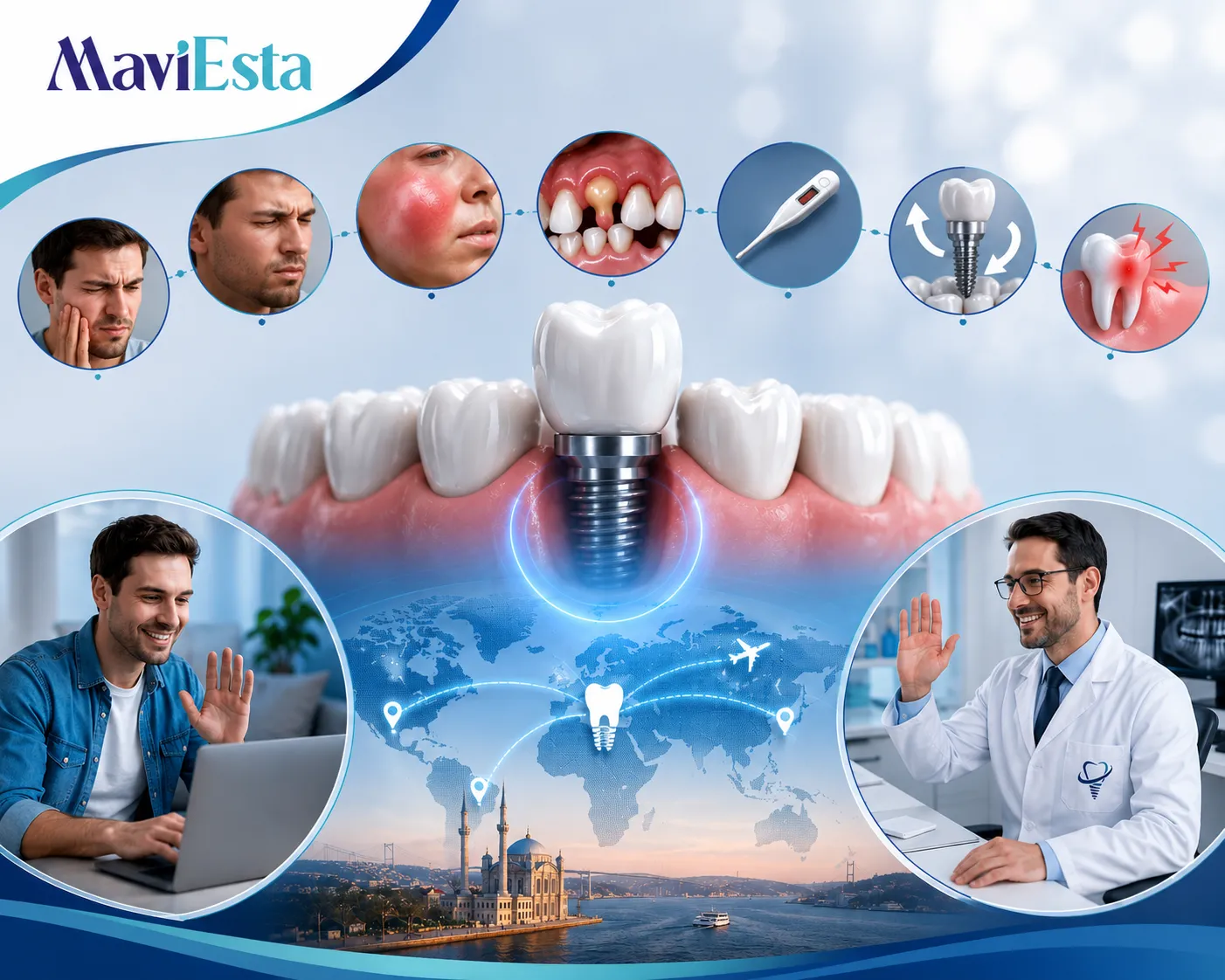
When to Contact Your Dentist — Decision Guide
Experiencing pain or tingling after dental crown placement is perfectly normal, but the intensity of the pain varies from case to case. Some cases require immediate intervention from the dentist and are usually accompanied by the following symptoms:
- Unbearable pain that does not subside even after trying various pain management methods, including taking painkillers.
- Significant swelling of the cheek or gums with extreme difficulty opening the mouth.
- Pus on the gums accompanied by bleeding and bad breath.
- Fever accompanied by one of the above symptoms.
- A feeling of movement in the crown or instability of the dental implants.
- Excessive pressure or sensitivity to pressure (you should see your dentist soon).
Had Your Implant Done Abroad? How to Get Help Remotely
Many patients face significant difficulty communicating with their dentist when undergoing dental implant surgery abroad, a major concern for international patients. However, at MaviEsta, it’s a completely different story.Discover the best place to get dental implants in the world with Turkey leading affordable quality treatments saving up to 70% compared to US UK.
MaviEsta Free Remote Consultation
At MaviEsta, our role extends beyond just dental implant surgery. We follow up with patients on all progress even after they return home.
Contact us today and book your free consultation.
FAQ
Is it normal to have throbbing pain after a crown?
A tingling sensation is very common, especially during the first 72 hours after a dental implant, and can be controlled using medications prescribed by the dentist.
What are the signs of crown failure?
Swelling of the gums and cheeks, pus and bleeding in the teeth, difficulty opening the mouth, pain, in addition to a high body temperature.
Can a dental crown push on a nerve?
This can happen as a result of excessive pressure on the crown during chewing, and to avoid this during the initial period, the dentist advises eating soft foods.
Is it normal to experience tingling during the first week after getting a dental crown?
No, the pain usually lasts for only three days and then gradually subsides. If it persists longer than that, you should consult your dentist as soon as possible.
How long pain after implant crown?
The pain after the dental crown is placed lasts for 3 days and gradually decreases. If you notice the pain persisting along with other symptoms, please contact your dentist as soon as possible.
Conclusion
Throbbing pain after dental implant crown is a common symptom during dental implant surgery. The pain can usually be managed with painkillers and typically subsides gradually after three days. If you experience increased pain accompanied by swelling of the gums or cheek, bleeding, and fever, please contact your dentist immediately.At MaviEsta, we follow up with our patients through the recovery stages step by step, even after returning home.